The production of ultrapure water is a fundamental requirement for numerous industrial sectors, including the pharmaceutical, electronics, chemical, energy and food industries, where the water must be free from impurities, salts, bacteria and suspended particles.
Ultrapure water is characterised by a conductivity of less than 0.1 µS/cm and an extremely low ionic content. To achieve these levels of purity, advanced water treatment technologies are used, often in combination to ensure maximum efficiency.
Technologies for the Production of Ultrapure Water
Reverse Osmosis (RO)
- Removes up to 99% of dissolved salts and organic substances.
- This is the first stage of purification prior to final deionisation
.
Ion Exchange with Selective Resins
- It uses mixed-bed resins to remove ionic residues from the water following reverse osmosis. It ensures that conductivity is reduced to levels close to zero.
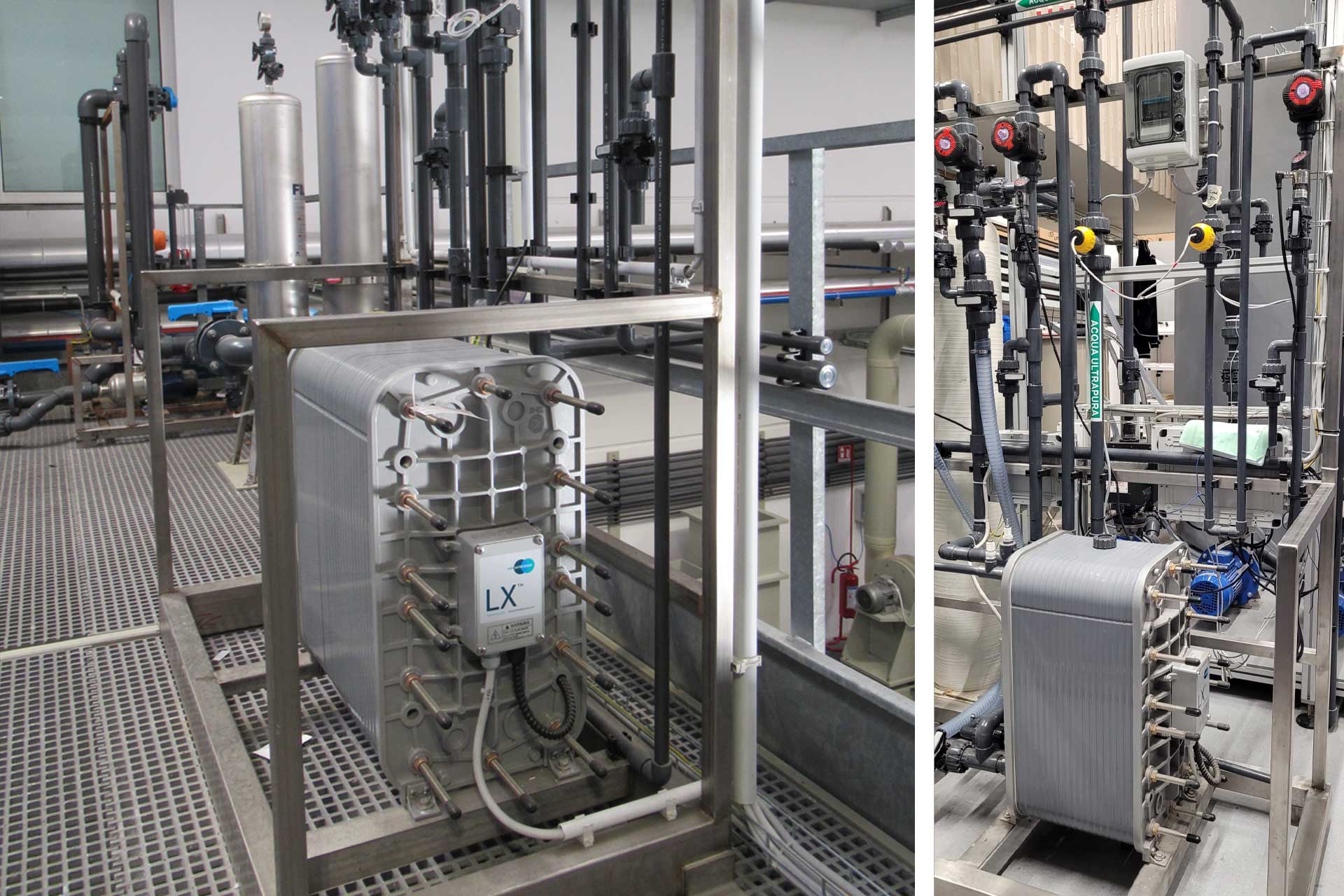
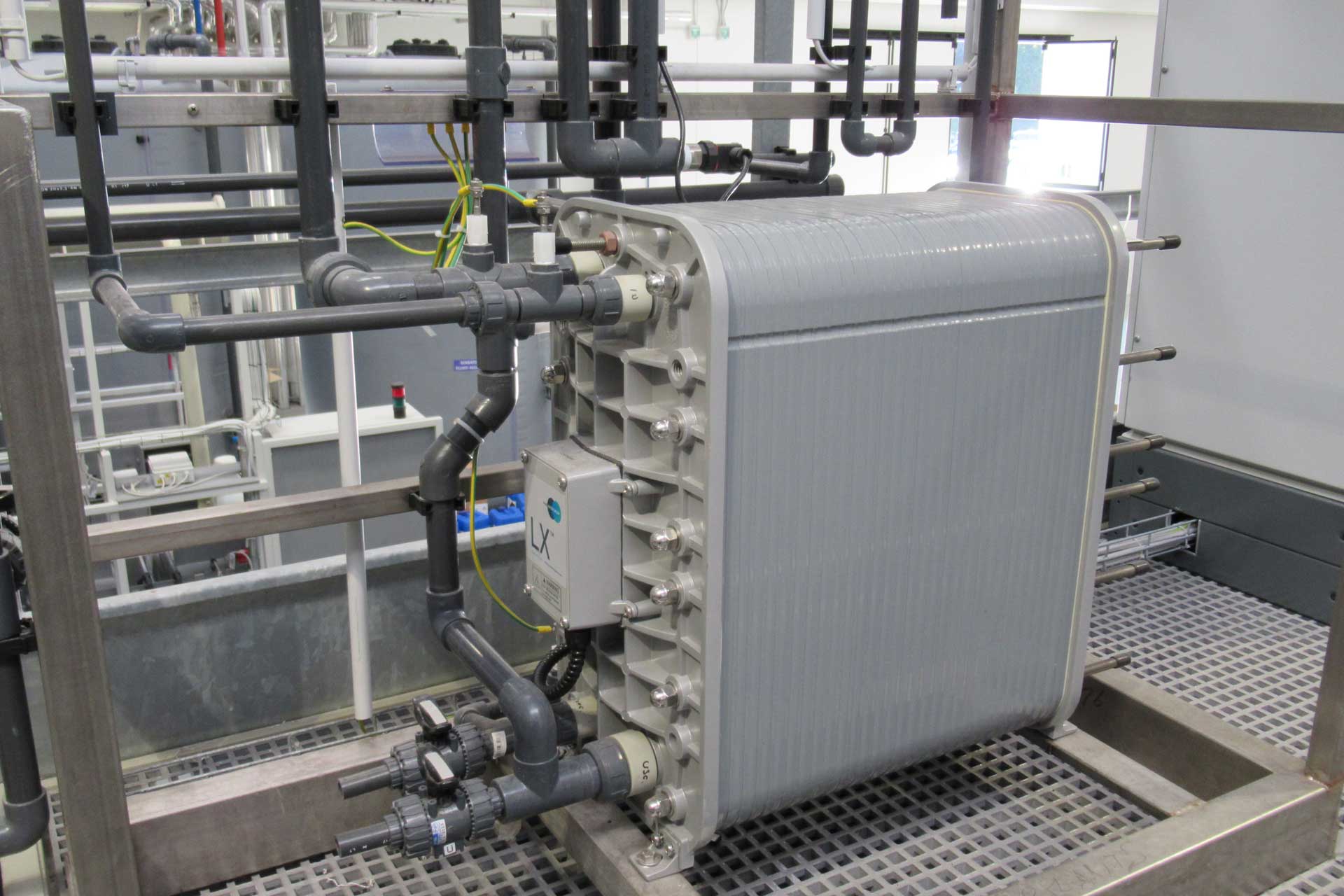
Electro-deionisation (EDI)
- It combines the principle of ion exchange with an electric field, eliminating the need for chemical regenerants.
- It produces water with a resistivity of up to 18.2 MΩ·cm, ideal for the electronics industry.
Applications of Ultrapure Water
- Electronics industry: manufacture of semiconductors, displays and printed circuit boards.
- Pharmaceutical sector: manufacture of medicines, injectable solutions and biotechnology products.
- Thermal power stations: supplying boilers and turbines to prevent scaling.
- Laboratories and hospitals: precision analysis and critical chemical processes.
Thanks to integrated technologies, modern ultrapure water production systems offer efficiency, sustainability and operational continuity, ensuring the highest quality for the most demanding industries.