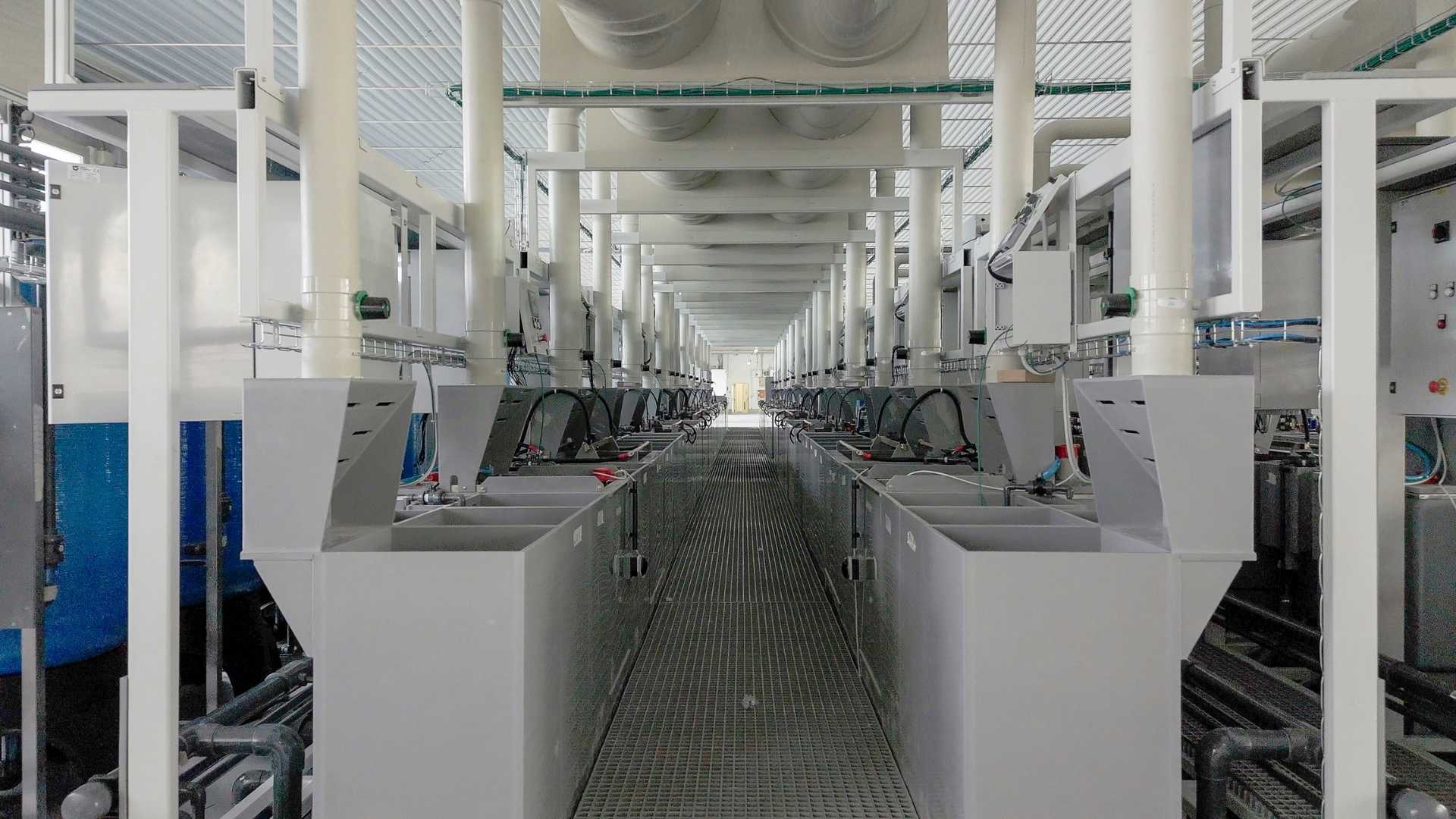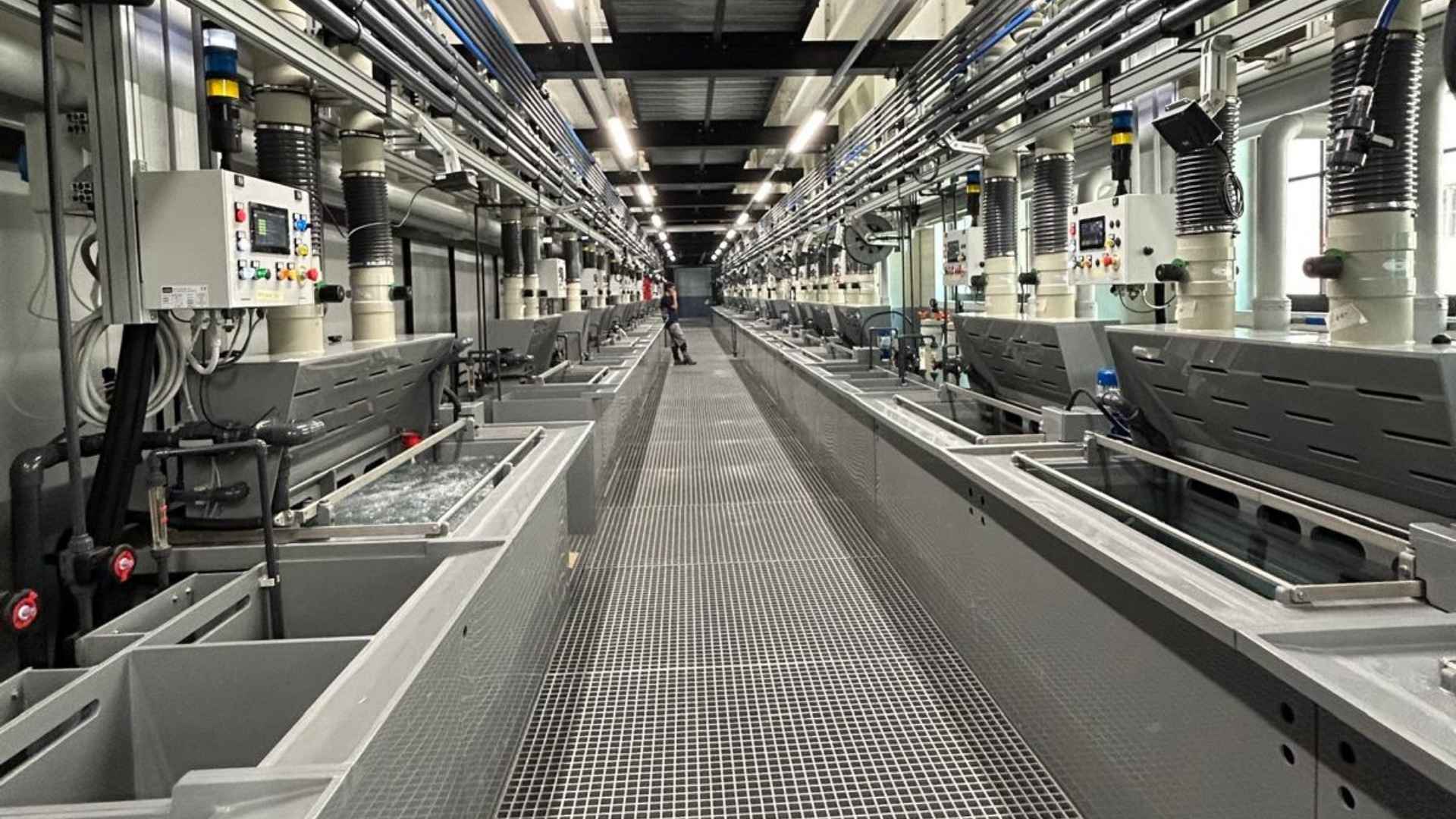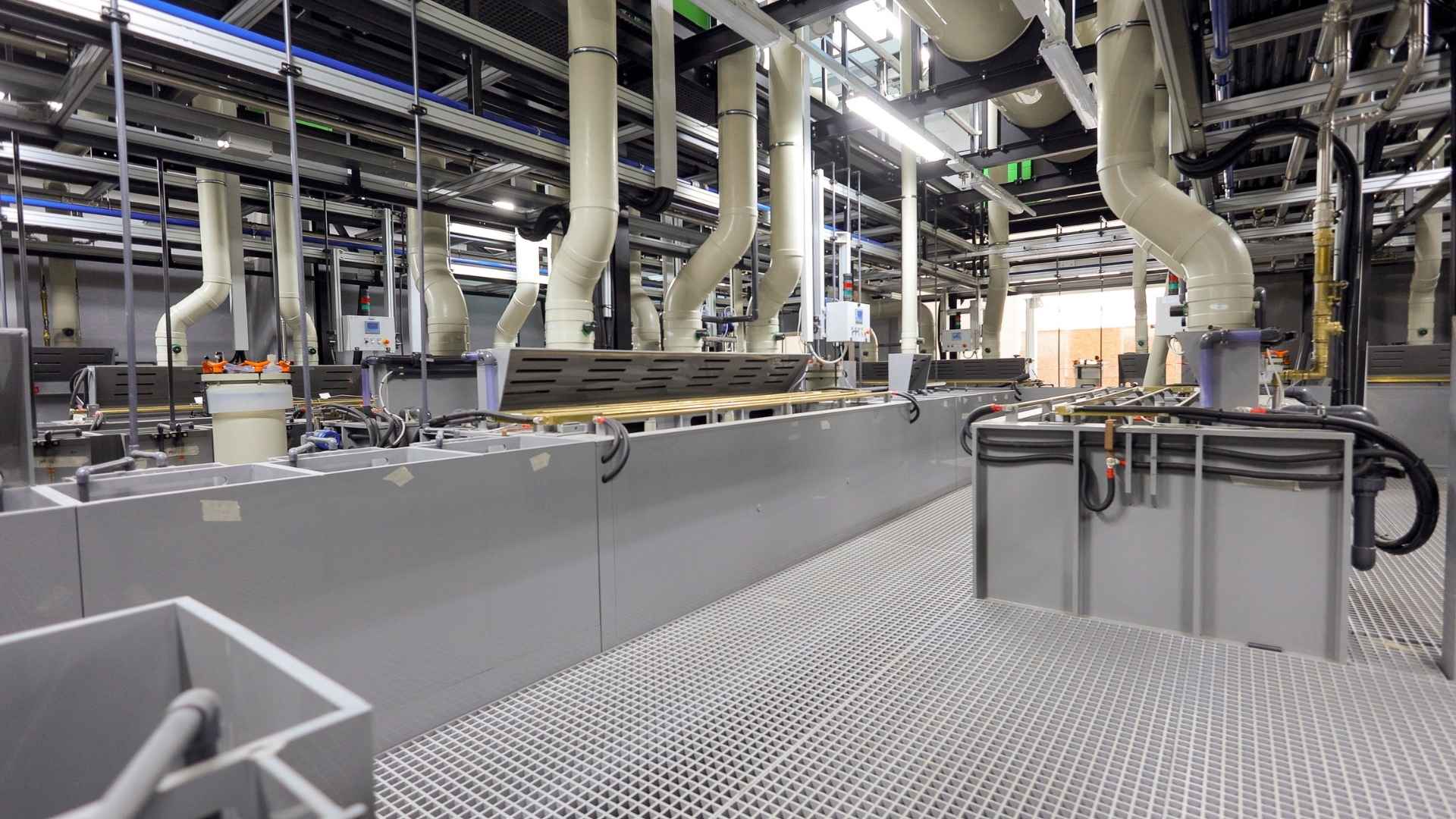
The alkaline copper plating process is an electrochemical process in which, by applying a potential difference between the anode and cathode, metallic copper is deposited onto the surface of objects from alkaline copper solutions.
In industrial practice, this plating process is used when dealing with objects made of alloys that could be corroded by acidic solutions and therefore cannot be subjected directly to acid copper plating.
The alkalinity of the solution allows for the electroplating of metallic copper onto alloys such as zamak and steel, without the risk of the object’s surface being damaged by the chemical action of acidic solutions.
Before the copper plating process, the surface of the object must be treated using a specific chemical and electrochemical cleaning process.
Alkaline copper plating serves not only to impart aesthetic properties to the object (a compact, semi-glossy deposit) but, above all, functional properties such as: excellent penetration (it covers even parts with complex geometries uniformly), corrosion protection and, crucially, the role of a bonding layer for subsequent acid copper plating, nickel plating or gold plating.