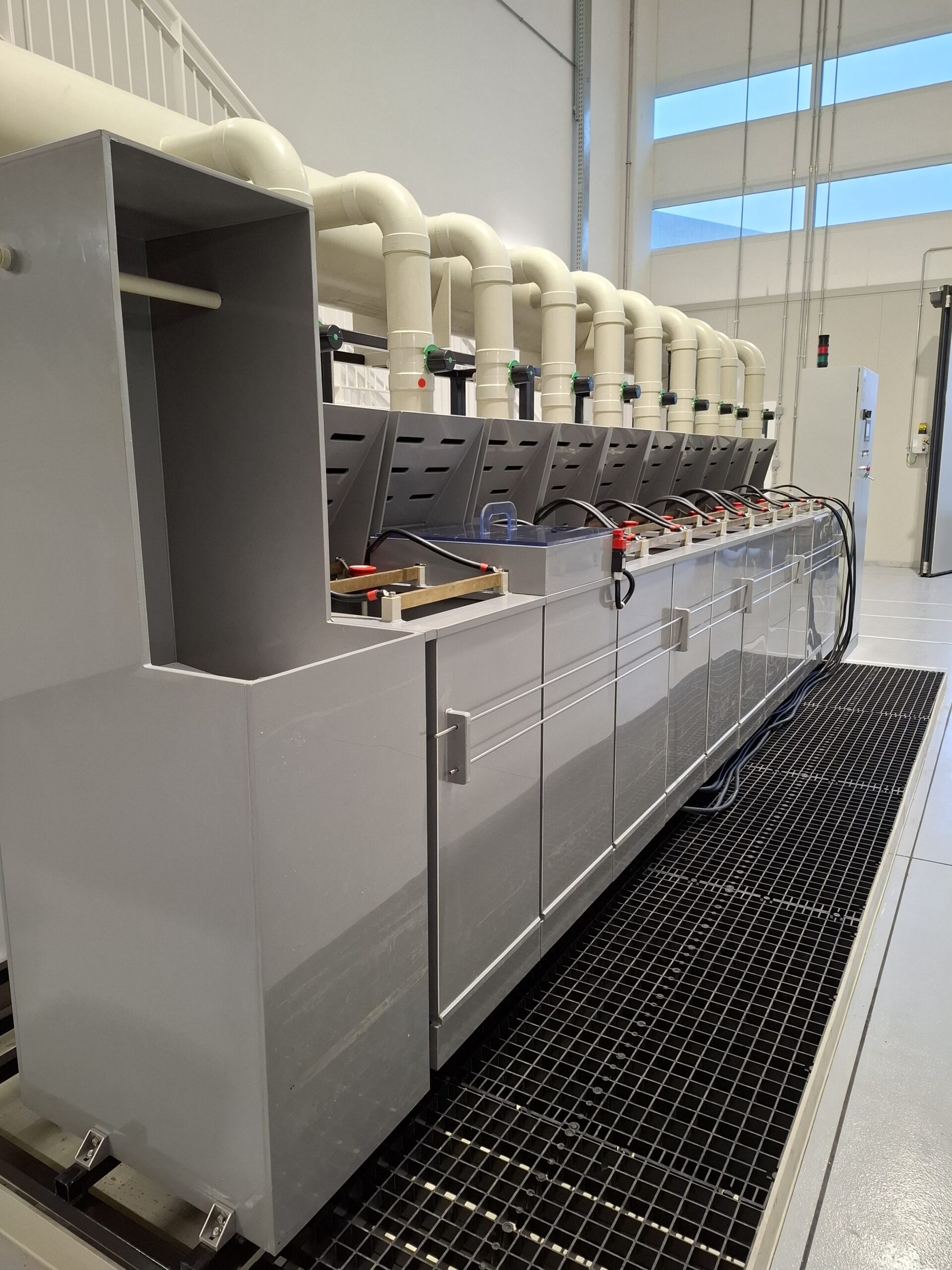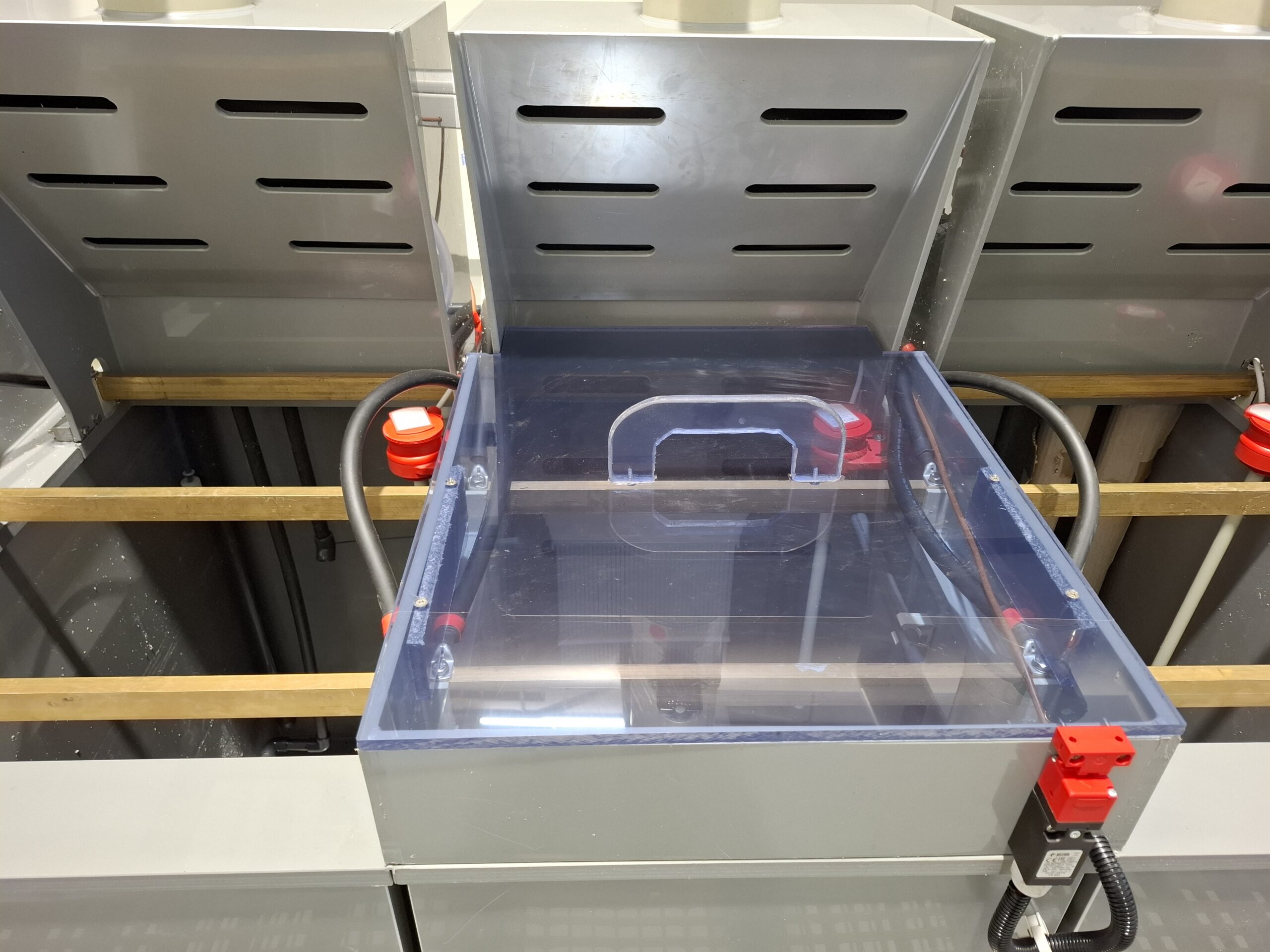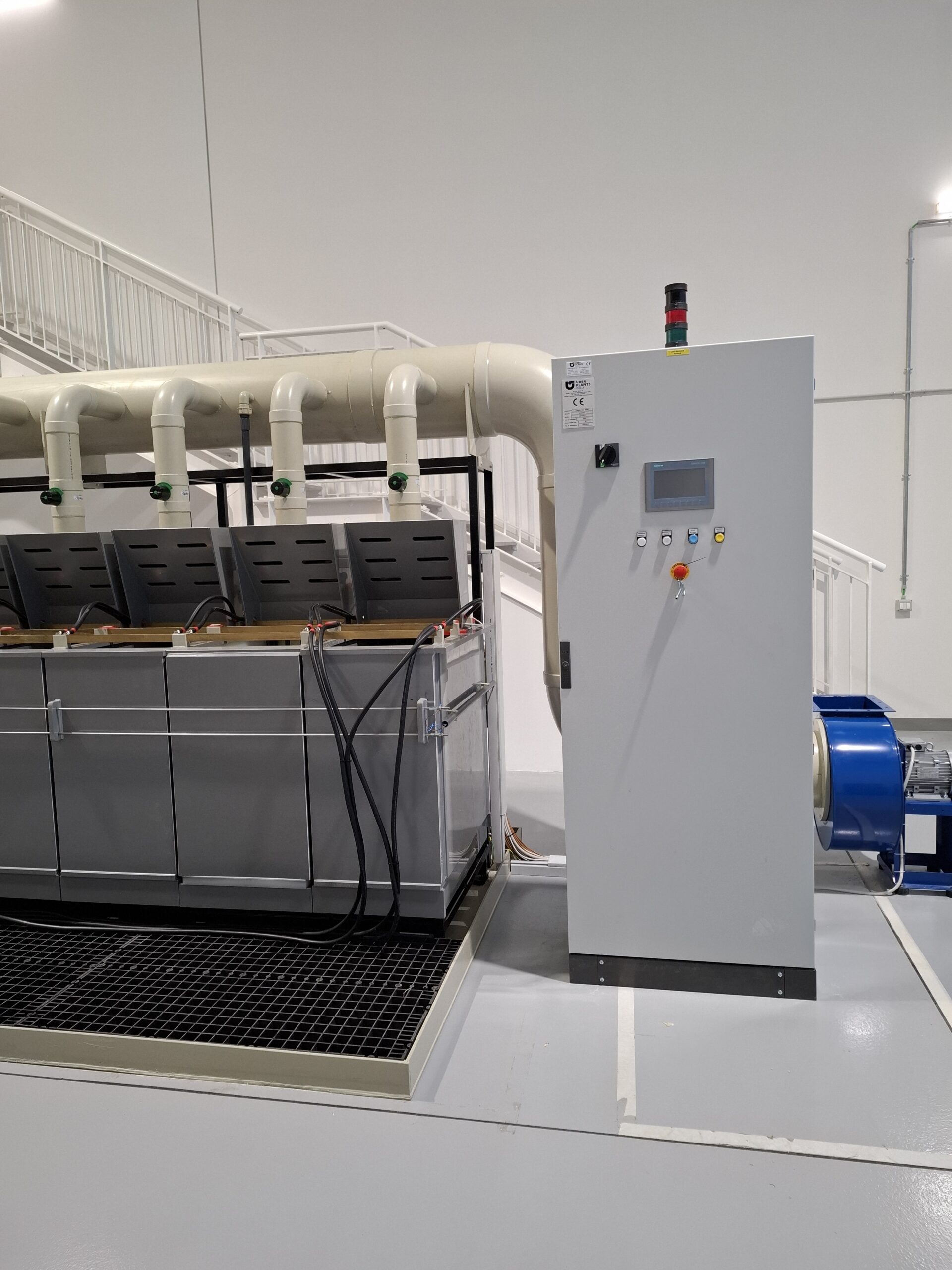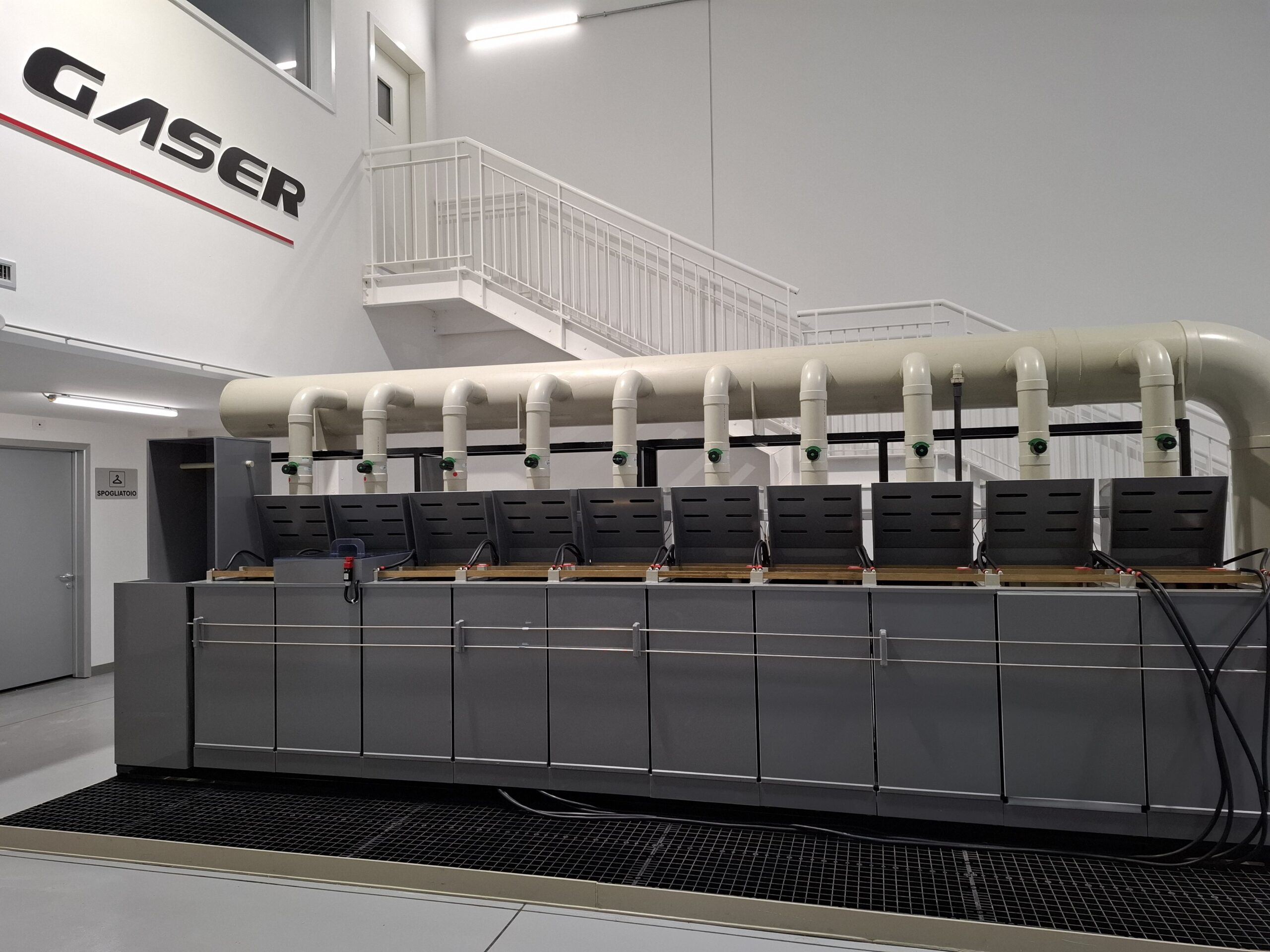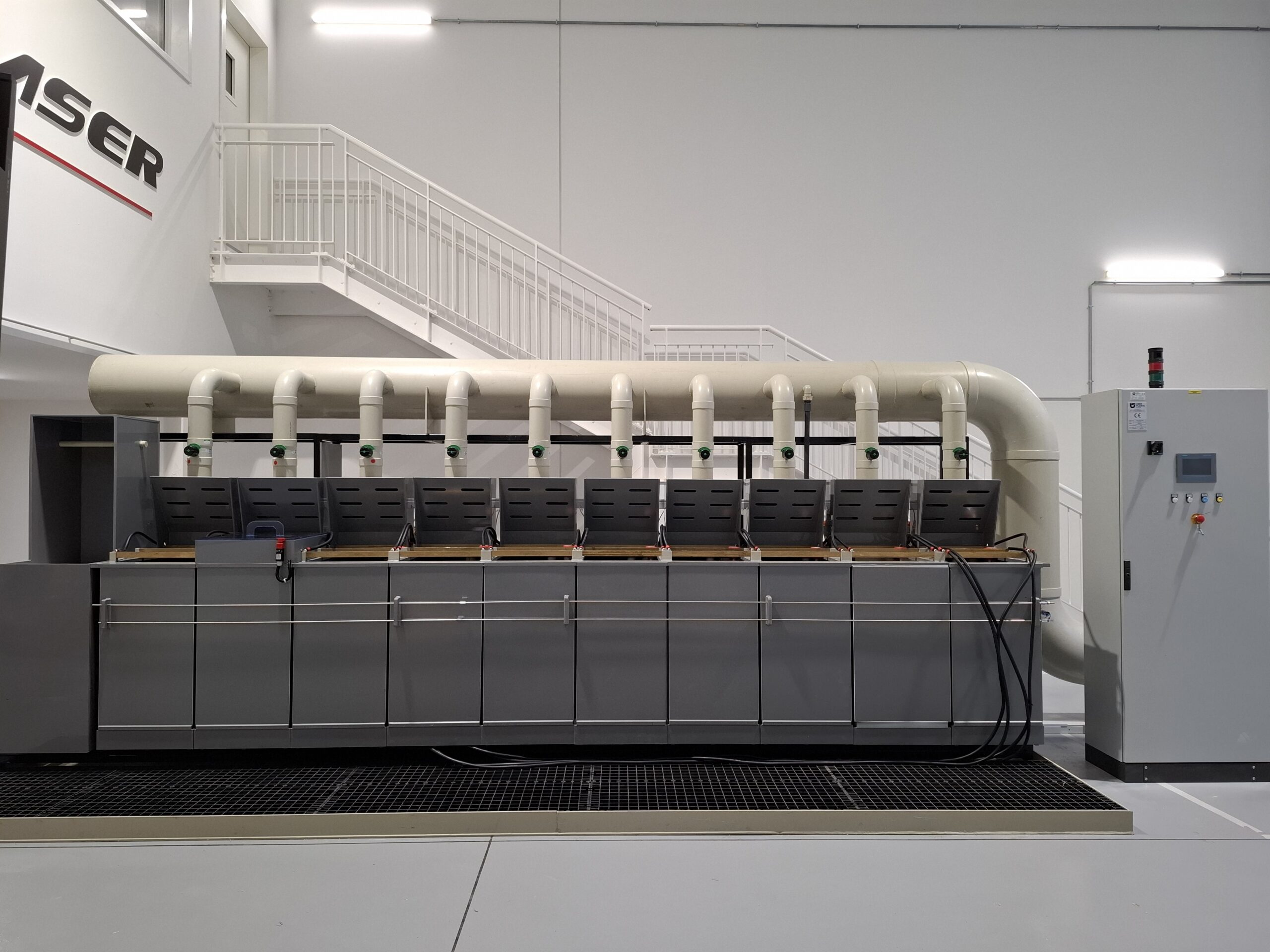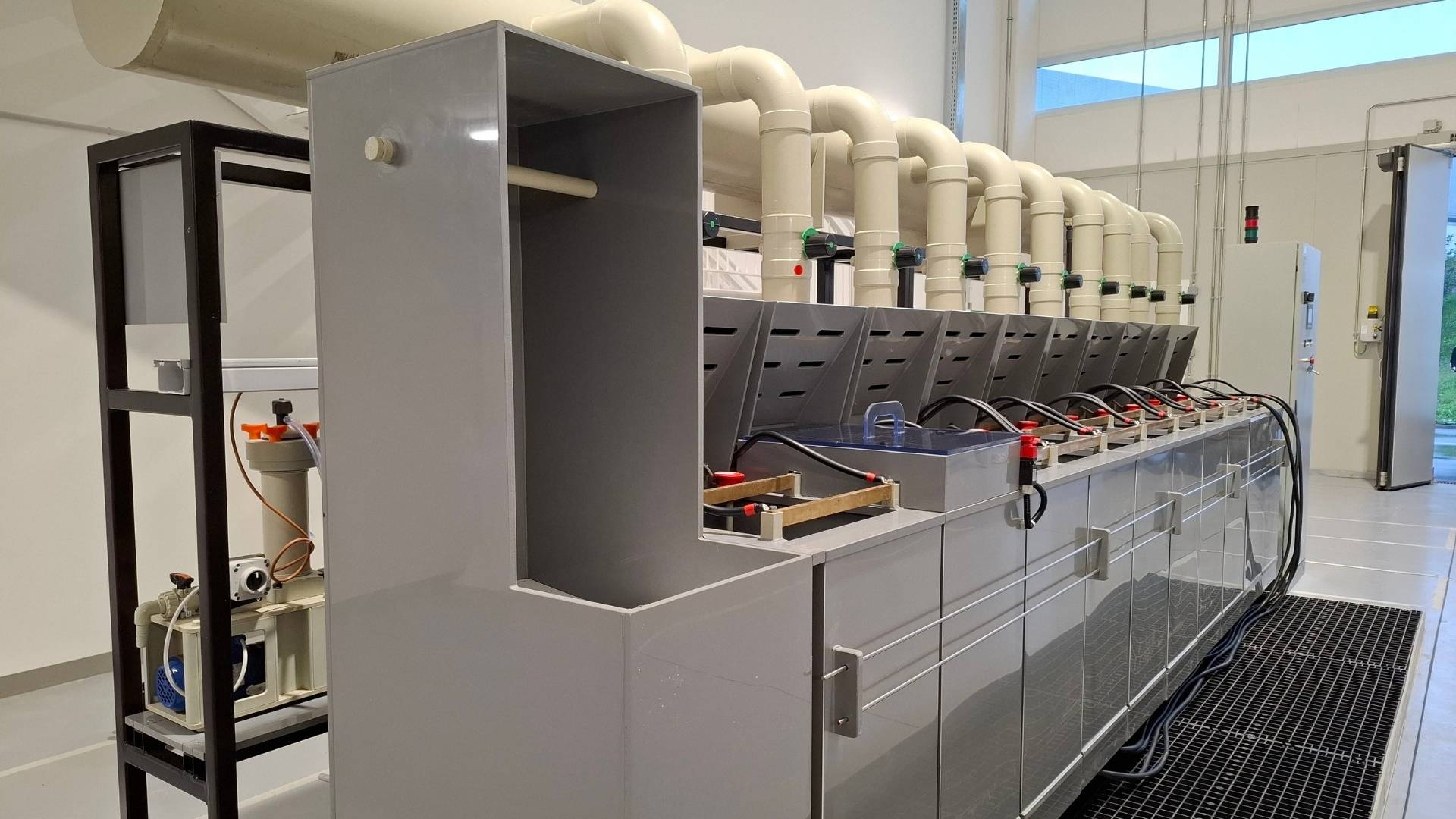
The anodic oxidation (or anodization) process is an electrochemical process by which, through the application of a potential difference, the surface of a metal object (mainly aluminum) is transformed into a protective oxide layer.
Unlike gilding, the oxygen that reacts with the object is not deposited from the outside, but combines with the base metal starting from the electrolytic solution, creating a layer that is an integral part of the surface of the artifact itself.
However, before the oxide layer can form, the substrate must be prepared through a specific process of chemical cleaning, degreasing and satin finishing, which are essential to ensure the uniformity of the treatment.
Anodic oxidation serves not only to give the object aesthetic characteristics (thanks to the possibility of coloring the porous layer) but also functional characteristics such as: corrosion resistance, surface hardness and electrical insulation.