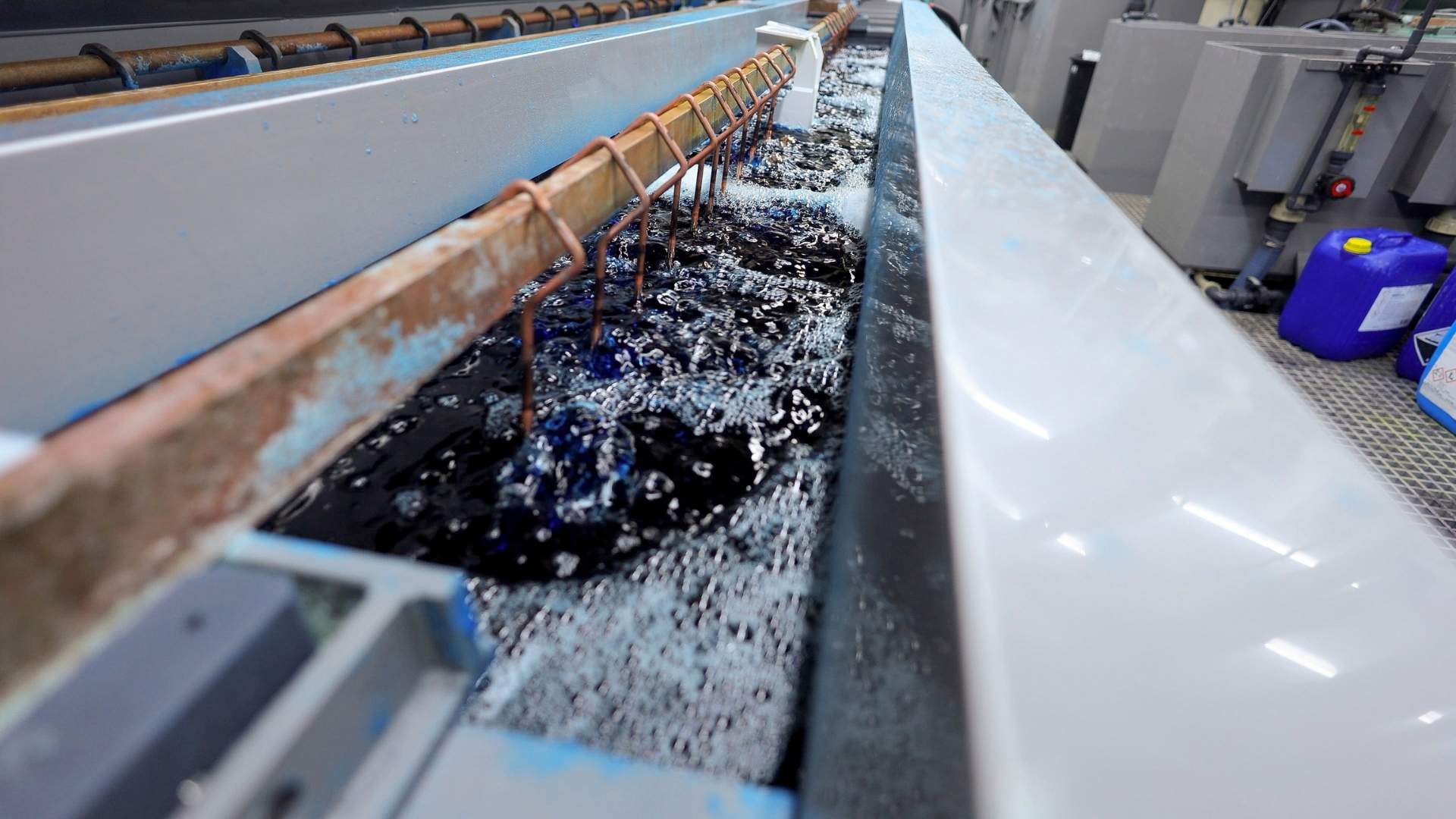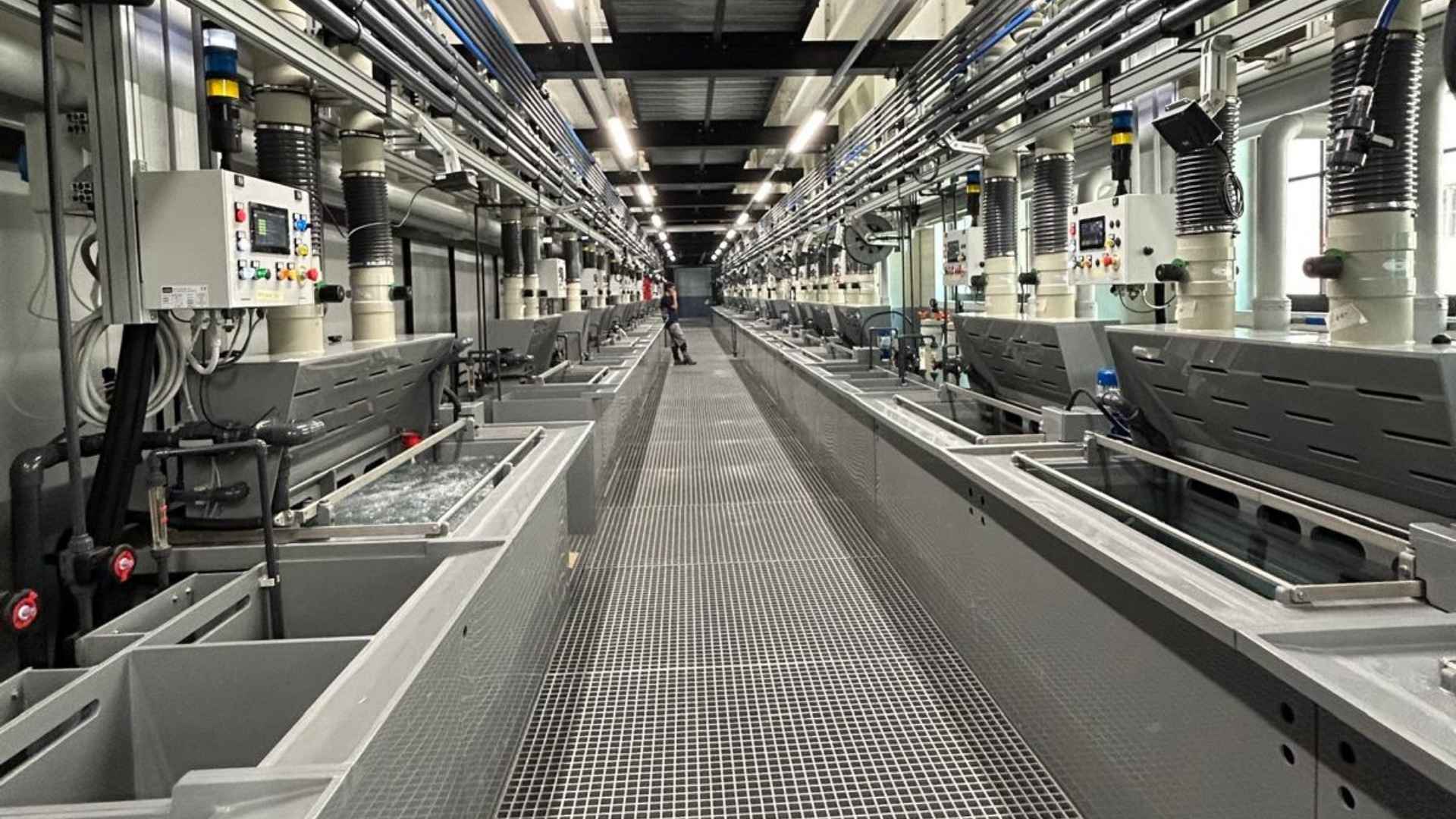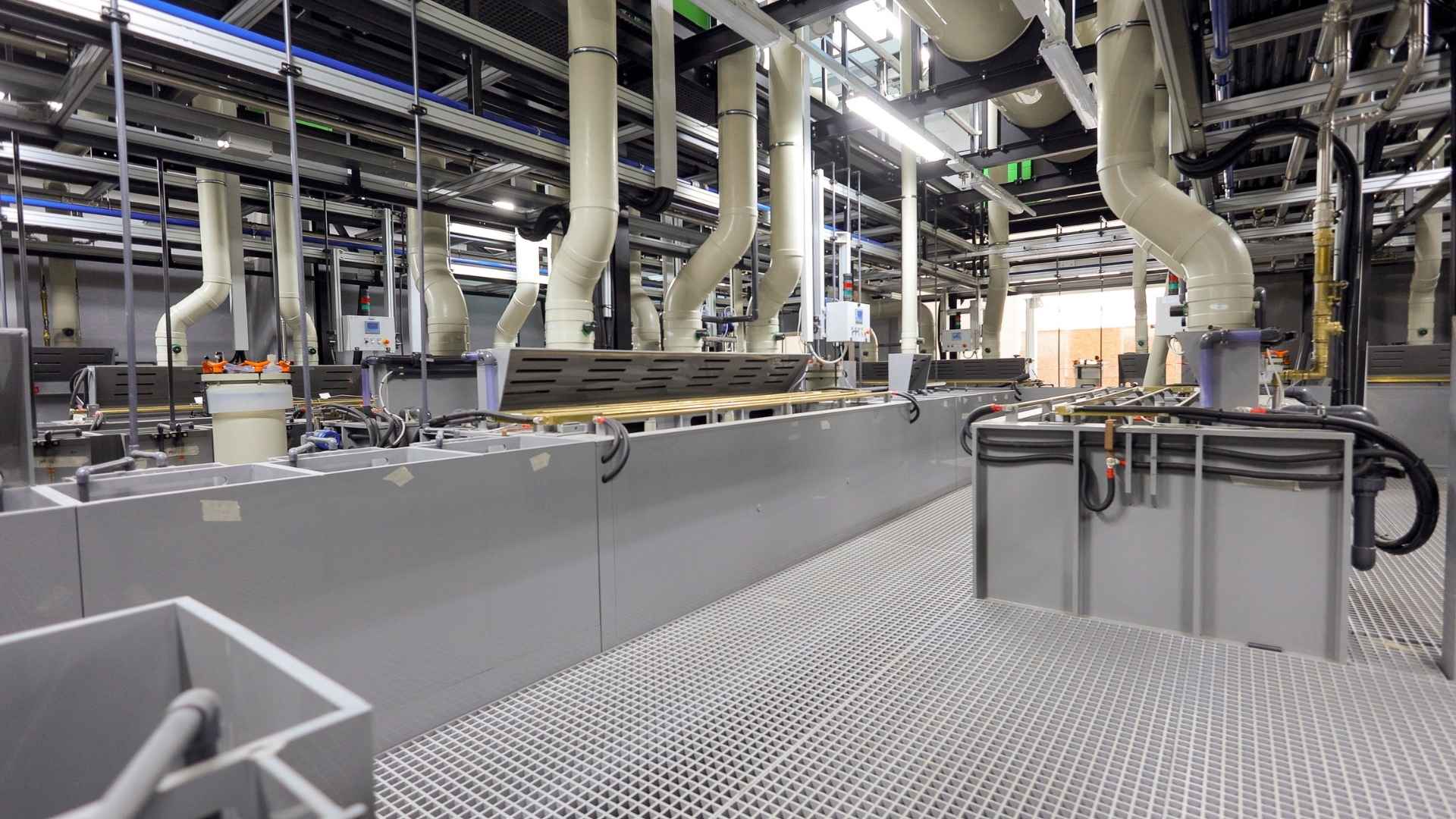
The acid copper plating process is an electrochemical process used in many industrial sectors to deposit metallic copper from acidic solutions of its salts, typically copper sulphate and copper chloride, in an environment made acidic by sulphuric acid.
In addition to copper salts, organic agents are normally used in acid copper electroplating baths to act as levelling and brightening agents. The use of these auxiliary products ensures excellent levelling and brightening performance, which is particularly valued in decorative coatings. The copper deposited on the object is extremely shiny and is able to ‘fill in’ the micro-imperfections of the base material.
Before the copper is deposited, the substrate must be prepared using a specific chemical and electrochemical cleaning process and, in the case of ferrous materials or zinc alloys, an alkaline pre-copper plating process to ensure adhesion.
Acid copper plating serves not only to give the object aesthetic qualities (its characteristic bright pinkish colour) but, above all, functional properties such as: high electrical and thermal conductivity, the ability to level surfaces, and the role of an intermediate layer to improve the adhesion of subsequent treatments (such as nickel and gold).